
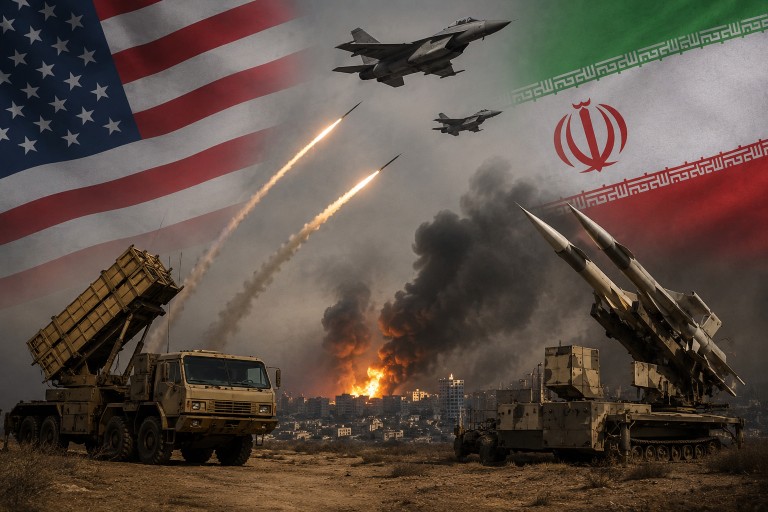
The United States and Iran have intensified their military actions for a sixth consecutive day, escalating fears of a broader regional conflict and putting a recently established interim peace framework under significant stress. The U.S. conducted fresh strikes on targets near Tehran and claimed to have targeted a vessel approaching Iran’s Kharg Island, accusing it of disregarding multiple warnings. Iranian officials have reported dozens of casualties from these recent strikes and have strongly condemned the attacks.
In retaliation, Iran launched missiles and drones at Bahrain, Jordan, and Kuwait, which host U.S. military bases. Iraqi authorities also noted that a drone attack was intercepted near Erbil, and oil loading activities at Basra were temporarily halted after a drone struck a tanker, though it did not cause any significant damage. The tensions have further escalated around the Strait of Hormuz, a critical passage for global energy supplies. Iran announced the closure of the waterway and warned of extending military actions if the U.S. targets more of its infrastructure. Iran-backed groups in the area have been put on high alert, which raises concerns about potential disruptions to global shipping routes.
The renewed hostilities have also impacted international energy markets, with oil prices rising to approximately $85 per barrel due to decreased shipping traffic through the Strait of Hormuz. Several countries, including India, have advised against sending merchant vessels and sailors through the region until the security situation improves. This volatile environment has left the global community on edge, watching closely how the situation unfolds and its potential implications for energy supplies worldwide.
Despite the ongoing military escalation, U.S. President Donald Trump has stated that Washington remains open to negotiating a settlement. However, Iranian leaders have insisted they will not engage in negotiations under military pressure. Diplomatic efforts by regional mediators have so far failed to ease the tensions, leaving the international community concerned about the prospects for peace in the region.