
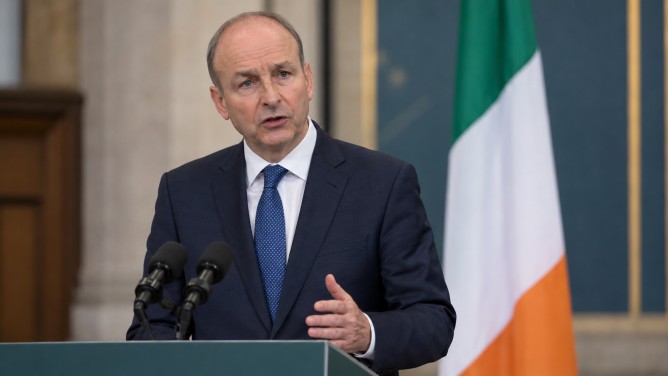
Irish Taoiseach Micheál Martin has called on public sector unions and government representatives to de-escalate tensions ahead of planned nationwide strikes, asserting that industrial action is unwarranted given the government’s financial commitments to public service pay. Martin cited tax reductions in the national budget and a €1.2 billion allocation for public service wages as evidence of the government’s willingness to engage in meaningful negotiations.
The call for calm comes as more than 300,000 public sector workers prepare to strike on October 14, with additional industrial action expected on October 21. The strikes are anticipated to cause significant disruptions, including potential interference with parliamentary proceedings due to union pickets outside Leinster House. This situation has sparked a contentious debate between the government and unions over pay and living costs.
Martin’s remarks have been met with criticism, particularly from Phil Ní Sheaghdha, general secretary of the Irish Nurses and Midwives Organisation (INMO), who described them as dismissive of workers’ concerns. Public sector unions accuse the government of failing to offer an adequate pay increase to offset the pressures of rising living costs.
SIPTU, one of the largest trade unions in Ireland, is advocating for negotiations to restore workers’ purchasing power lost since 2026. They warn of possible escalation if no substantial progress is made in discussions. Meanwhile, Public Expenditure Minister Jack Chambers has labeled the planned strikes as unwarranted, emphasizing that the government has been open to dialogue for months. Chambers also noted that standard procedures might apply to employees who do not report to work during the strikes.
The dispute underscores the growing friction between Irish public sector unions and the government over wages and the terms of a prospective pay agreement. As the strike dates approach, both sides remain entrenched in their positions, with the potential for further unrest if a compromise is not reached.