
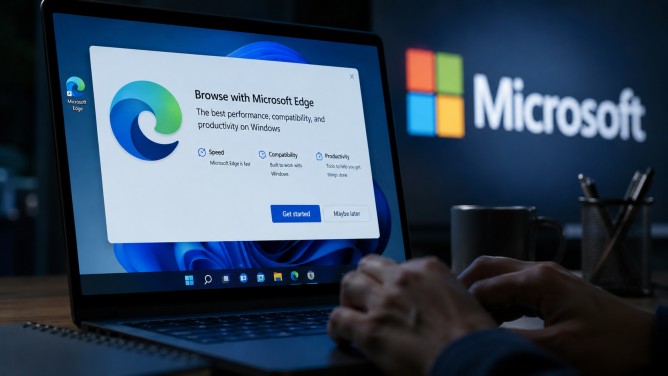
Microsoft is once again under the spotlight over alleged tactics aimed at steering Windows users towards its Edge browser, potentially restricting the use of alternative software. This scrutiny arises from a recent report by Mozilla Research titled “Over the Edge 2.0,” which accuses the tech giant of using design strategies that complicate the process of downloading, setting as default, and consistently using other browsers on its Windows devices.
The report claims Microsoft actively promotes Edge through its platforms such as Windows, Bing, and Copilot. It notes tactics that seemingly deter users from switching to competing browsers, including promotional prompts urging Chrome users to switch to Edge, the automatic opening of links in Edge regardless of default browser settings, and the failure to retain browser preferences during software updates. These practices have raised concerns about their impact on browser competition globally.
The Browser Choice Alliance, representing companies like Opera, Vivaldi, and Google Chrome, has highlighted these findings as indicative of Microsoft’s influence over browser markets worldwide. The alliance is calling for the company to honor user preferences and foster a more equitable browsing environment. Despite Edge’s promotion, Google Chrome continues to dominate the global browser market with nearly 70% share, followed by Apple’s Safari, while Microsoft Edge holds a distant third place with just over 5% market share.
While the report acknowledges that browser choice seems to be better protected within the European Economic Area—thanks to regulations under the Digital Markets Act that have led Microsoft to amend some criticized practices—it contends that many of these tactics remain prevalent in regions like the United States, India, and the United Kingdom. This ongoing situation has prompted industry groups to advocate for Microsoft to streamline the browser-switching process and eliminate practices perceived as detrimental to competition and consumer choice.