
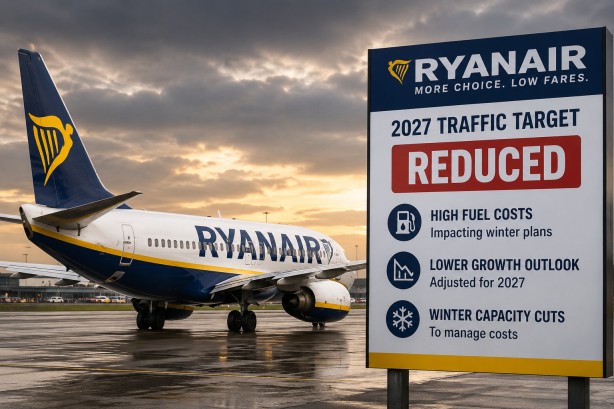
Ryanair has revised its fiscal 2027 passenger target downwards, now aiming for 214 million passengers instead of the previously projected 216 million. This adjustment comes as the airline strategically reduces its winter capacity to mitigate the impact of soaring unhedged jet-fuel costs. With jet fuel prices currently hovering around $140 per barrel, Ryanair has warned that persistently high prices could lead to a significant increase in European short-haul airfares. From November to March, the airline anticipates passenger traffic will remain largely unchanged year-on-year as it strategically manages capacity during the traditionally slower winter months.
To shield itself from the current high fuel prices, Ryanair has hedged approximately 80% of its fuel requirements for fiscal 2027, securing prices at about $67 per barrel through March 2027. This hedging strategy provides the airline with some financial protection against market fluctuations. The reduction in winter capacity is expected to cut seasonal losses by between €70 million and €100 million. Already, Ryanair has pulled five aircraft from its Charleroi base in Belgium and slashed around two million seats from its Brussels schedule for the winter 2026 and summer 2027 periods. The airline also cautioned that carriers with less extensive fuel hedging could face increased financial burdens if high oil prices persist.
Despite the challenging winter forecast, Ryanair remains optimistic about its summer performance, predicting traffic growth of over 5%. In August, the airline’s passenger numbers rose by 6% compared to the previous year, reaching 22.2 million, while maintaining a load factor of 96%. During the month, Ryanair operated over 120,500 flights, although more than 400 had to be canceled due to eruptions from Mount Etna.
Looking ahead, Ryanair anticipates that its fiscal 2027 profit after tax will fall short of the record levels achieved in the last financial year. However, the airline noted that it is still too early to offer detailed profit guidance for the year. By adjusting its operations and leveraging its fuel hedging strategy, Ryanair is positioning itself to navigate the challenging market conditions posed by high fuel prices, while still capitalizing on the anticipated growth in summer travel demand.