
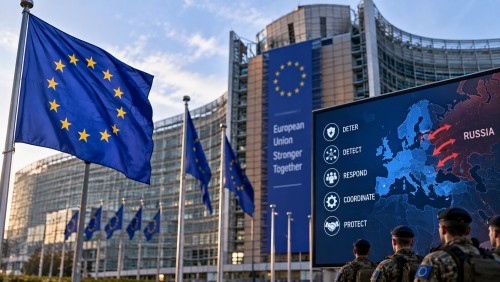
The European Union is set to bolster its security framework with a new emergency mechanism aimed at countering hybrid threats, as announced by European Commission President Ursula von der Leyen. This development, revealed during her State of the Union address, is intended to enhance the EU’s ability to respond to security incidents that fall short of armed aggression but still threaten member states.
This proposed mechanism will be modeled after NATO’s Article 4, which facilitates consultation and coordinated responses among member nations facing security challenges. The initiative is a part of a broader European security strategy anticipated later this year, which includes a counter-hybrid playbook designed to strengthen the EU’s defenses against cyberattacks, drone incidents, and other forms of hybrid warfare.
Further expanding its strategic capabilities, the EU plans to introduce a European Instrument for Strategic Enablers. This tool will align with NATO to enhance critical areas such as air defense, strategic transport, space, and cybersecurity. Additionally, the potential establishment of a European Security Council is under consideration. This council could incorporate non-EU countries like Ukraine, the United Kingdom, Norway, and Canada, aiming to improve coordination on broader European security issues.
In addressing ongoing regional concerns, the EU reaffirmed its commitment to Ukraine. While fewer new measures were discussed, the EU aims to facilitate Ukraine’s access to US Patriot missiles through its financial assistance programs and provide humanitarian support focused on energy and heating needs.
Moreover, the EU is preparing to launch a defense-industry initiative involving collaborative projects between European and Ukrainian companies. Von der Leyen also mentioned forthcoming proposals for roadmaps to guide countries, including Ukraine, that are making significant strides toward EU membership. These moves illustrate the EU’s continued prioritization of security and stability within and beyond its borders.